




















For the last decade, independent physicians in DPC, concierge, and specialty practices have watched value-based care evolve around them rather than for them. CMS’s new ACCESS Model (Advancing Chronic Care with Effective, Scalable Solutions) finally changes that equation. It is a 10-year, voluntary, technology-enabled chronic care model that explicitly rewards outcomes—exactly where independent practices already excel.
But there is a hard truth: ACCESS is not a “plug in a device and bill more codes” opportunity. It is an operational and data model shift that requires a reliable technology partner if you want to participate without drowning in fragmentation, compliance risk, and administrative noise.
What ACCESS Really Expects From You?
Many early summaries focus on the payment buzzwords—Outcome-Aligned Payments (OAPs), RPM codes like 99445, and “no downside risk.” Those matters, but they are the byproduct of something more fundamental: ACCESS assumes you can deliver continuous, tech-enabled chronic care at scale.
At a minimum, participating clinicians need to be able to:
- Identify and enroll the right Medicare FFS patients with conditions like heart failure, diabetes, and hypertension into tech-enabled care pathways.
- Capture physiological data (weight, BP, SpO2, glucose, etc.) from home devices on a reliable cadence, including partial-adherence scenarios that now qualify under CPT 99445 (2–15 days of data).
- Turn raw data into documented, timely clinical actions—escalations, med adjustments, outreach—and link those to ACCESS outcome metrics.
- Maintain audit-ready documentation that can withstand scrutiny in an environment where improper payments in digital care programs have approached 40% in some reviews.
This is hard to do with spreadsheets, portal hopping, and fragmented vendors. It is nearly impossible to do consistently across a panel of high-risk patients without a purpose-built infrastructure.
Why Independent DPC and Concierge Practices Are Uniquely Positioned?
The ACCESS Model was not written for giant hospital systems alone. CMS explicitly designed it as a national program to expand technology-enabled care for Medicare beneficiaries wherever they receive care, including community-based and independent practices.
Independent DPC and concierge physicians, in particular, have three structural advantages:
- Continuity of relationships: You know your panel deeply, which makes it easier to target the right high-risk patients and design realistic home monitoring plans they will actually follow.
- Operational agility: You can redesign a chronic care pathway in days, not months, without going through five committees and a system IT queue.
- Culture of access: DPC and concierge models already lean into messaging, virtual visits, and proactive outreach—exactly the modalities ACCESS intends to scale with technology support.
What most independent practices are missing is not clinical insight or patient trust. It is the infrastructure layer that connects what you already do well with what ACCESS requires you to document, measure, and report.
Tech Matters: What a “Reliable ACCESS Partner” Actually Looks Like?
From a physician’s perspective, “find a tech partner” is vague advice. For ACCESS participation to be safe and sustainable, your technology stack has to do very specific jobs:
- Seamless data capture
You need devices that are pre-configured, cellular where possible (to avoid WiFi barriers), and capable of capturing both full (16–30 days) and partial (2–15 days) adherence windows to support codes 99454 and 99445.
- Intelligent signal detection
It is no longer enough to see a list of readings. You need AI-assisted algorithms that flag risk trajectories—weight creep in heart failure, upward trends in BP, or silent hypoxia—before they become readmissions.
- Integrated documentation and billing
ACCESS does not replace RPM/CCM—it layers on top of them. Your platform should auto-log device days, clinical time (including shorter 10–19-minute interactions that will be supported by codes like 99470), and intervention notes into your existing EHR and billing workflows.
- Compliance by design
Every outreach, nudge, and escalation should be documented once and reused for clinical, billing, and audit purposes—rather than triple-charted in separate systems.
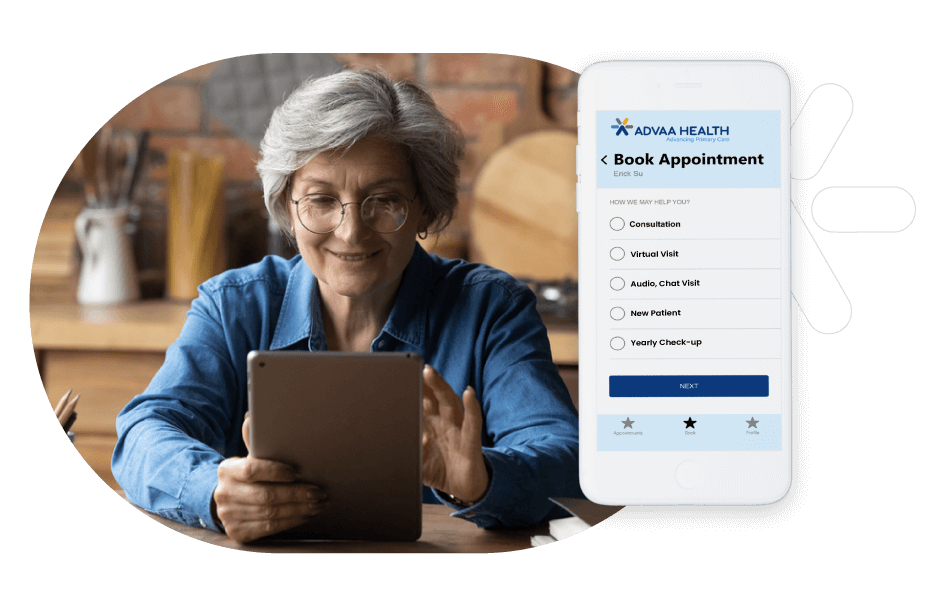
This is the lens through which we have built Advaa Health for independent practices. Our RPM and practice platform is designed to sit behind the scenes—enabling your DPC or concierge model to plug into ACCESS without sacrificing the intimacy of your patient relationships.
How Advaa Health Supports Independents in the ACCESS Era?
At Advaa Health, we have been focused from day one on independent practices, DPC, concierge care, and emerging hybrid models. That informs how we are approaching ACCESS with our partners:
- ACCESS-ready RPM foundation
Our remote monitoring platform already supports FDA-cleared scales, BP cuffs, and pulse oximeters with same-day shipping and white-glove onboarding for patients. It is built to meet and exceed CMS’s data transmission requirements, including the new 2–15 day 99445 pathway and traditional 16–30 day RPM thresholds.
- Integrated chronic care workflows
We provide templated yet customizable pathways for heart failure, hypertension, and diabetes that combine device data, AI alerts, and structured clinical actions into EHR-integrated flowsheets. This makes it easier for your team to demonstrate the outcome improvements that drive ACCESS payments.
- Built for DPC and concierge operations
Beyond RPM, Advaa includes membership management, digital front office, telehealth, and smart EHR capabilities tailored to independent primary care, DPC, and concierge practices. That means you are not duct-taping a hospital-grade system onto a relationship-driven access model.
- Compliance and audit readiness
Our documentation and reporting framework is aligned with Medicare and OIG expectations for digital care programs, helping you participate confidently while improper payment scrutiny increases.
This is not about turning your practice into a mini health system. It is about giving small, high-touch practices the infrastructure usually reserved for large organizations, while preserving the autonomy and flexibility that attracted you to independence in the first place.
A Practical Next Step for Independent Physicians
If you are an independent cardiology, primary care, DPC, or concierge physician, you do not need a 100-page white paper to decide whether ACCESS is for you.
You need clarity on three questions:
- Do I have enough high-risk Medicare patients with heart failure, hypertension, or diabetes to make ACCESS meaningful for my practice?
- Can my current workflows reliably capture, interpret, and act on home-based vitals data—and document those actions in a way that will stand up to CMS and OIG scrutiny?
- Do I have a technology partner that understands both the nuance of DPC/concierge models and the technical/compliance requirements of a 10-year CMS model like ACCESS?
If any of those answers are “no” or “I’m not sure,” that is the right time for a focused, educational conversation—not a sales pitch.