







Ask a rural clinic what limits its telehealth program, and privacy often comes up before technology does. A patient in a busy pharmacy or a shared break room is unlikely to discuss a mental health concern or a chronic condition if others can overhear the call. Distance adds a second barrier: for many rural patients, the nearest specialist is a long drive away.
A telemedicine booth addresses both problems. This post explains what one is, what CareBooth includes, and how pairing it with remote monitoring and care management turns a single visit into ongoing care.
What Is a Telemedicine Booth?
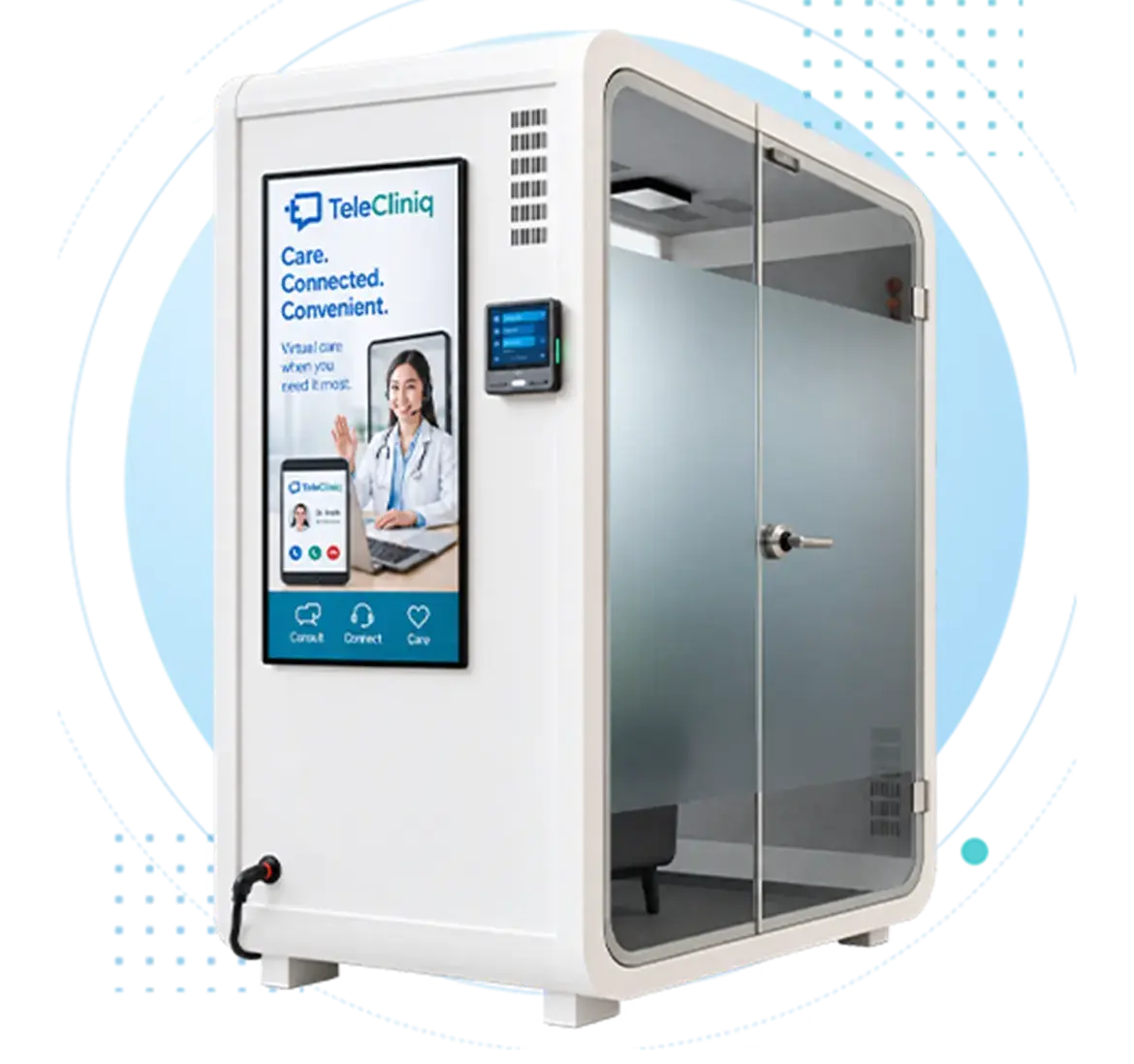
A telemedicine booth is an enclosed, private space built for virtual care. Unlike an open telehealth kiosk, which is often a tablet on a stand, a booth is designed so a patient can have a full consultation without being overheard.
Telemedicine CareBooth Features
- Private, enclosed space: a sound-dampened booth that lets patients speak freely during a consultation.
- Virtual consultation: video visits with a clinician, as if in an exam room.
- Self-service operation: guided check-in and readings that patients complete on their own.
- Vitals collection: blood pressure, pulse rate, SpO2, temperature, and weight come standard. Blood glucose, ECG, and a digital stethoscope are available as add-ons.
- EMR/EHR integration: real-time data sharing with clinicians, with support for your existing EHR.
- HIPAA-compliant architecture: built to support secure handling of patient data.
Why Rural Communities Are Adopting CareBooths
- Private, enclosed space. Patients are more likely to discuss sensitive topics in a closed space than in an open one.
- Specialist access without the drive. A booth can connect patients to clinicians who are not nearby, which matters where specialists are scarce.
- Less strain on clinic staff. Intake and vitals collection can happen before the clinician joins, leaving more of the visit for care.
- A reliable point of care. Patients without private space, equipment, or broadband at home still have somewhere dependable to connect.
What Advaa Health Adds: RPM, CCM, and EHR Integration
A booth gets the patient to a visit. What happens between visits decides whether care continues.
Remote patient monitoring (RPM) connects a patient’s devices to their care team. A clinician reviews readings such as blood pressure or glucose between visits and reaches out when numbers drift. For rural patients, this can catch problems sooner without another long drive to the clinic.
Chronic care management (CCM) gives patients with several ongoing conditions a dedicated care team between appointments. Staff check in regularly, keep the care plan current, and coordinate follow-up. In rural areas, this keeps patients supported even when the nearest clinic is far away
Advaa Health connects these services to the EHR your organization already uses, so readings, care plans, and documentation stay in one place. See why integrated EHR and RPM matters for daily workflow.
Medicare may pay separately for qualifying RPM and CCM services when requirements are met. Rules differ for RHCs and FQHCs, so confirm current requirements with your Medicare Administrative Contractor.
How This Fits Rural Health Transformation Funded Programs
Many state Rural Health Transformation Program plans prioritize telehealth, chronic disease management, and technology-enabled care. If your organization is an RHTP awardee, a booth combined with RPM and CCM can support those goals. Whether the purchase is an allowable use depends on your state agreement, so confirm with your program office first. For the full picture, read how CareBooth helps you turn RHTP funding into rural care access and our overview of what RHTP means for providers.
Frequently Asked Questions
What is the difference between a telehealth kiosk and a telemedicine booth?
Mainly enclosure and scope. A kiosk is often open and built for quick check-ins. A CareBooth is enclosed and built for a complete, private consultation, including vitals.
Is CareBooth HIPAA compliant?
Yes. CareBooth is built on a HIPAA-compliant architecture.
What vitals can it collect?
Blood pressure, pulse rate, SpO2, temperature, and weight come standard. Blood glucose, ECG, and a digital stethoscope are available as add-ons if your use case needs them.
Does it connect to our existing EHR?
Yes, CareBooth is built for real-time data sharing with clinicians and supports EMR/EHR integration.
Can RHTP funds be used for it?
It depends on your state’s approved plan and your agreement. Confirm with your state program office before purchasing.
Where can it be installed?
Hospitals, pharmacies, community health centers, government buildings, and rural health networks are the most common deployments.
Next Steps
Every site differs in space, connectivity, and the services you want to offer. Advaa Health can walk through the configuration that fits your deployment, including how RPM, CCM, and EHR integration work with CareBooth.
Talk to Advaa Health about CareBooth for your facility →
This article is for general informational purposes and is not legal, billing, or compliance advice. RHTP permitted uses vary by state and award. Consult your compliance officer or counsel for guidance specific to your organization.